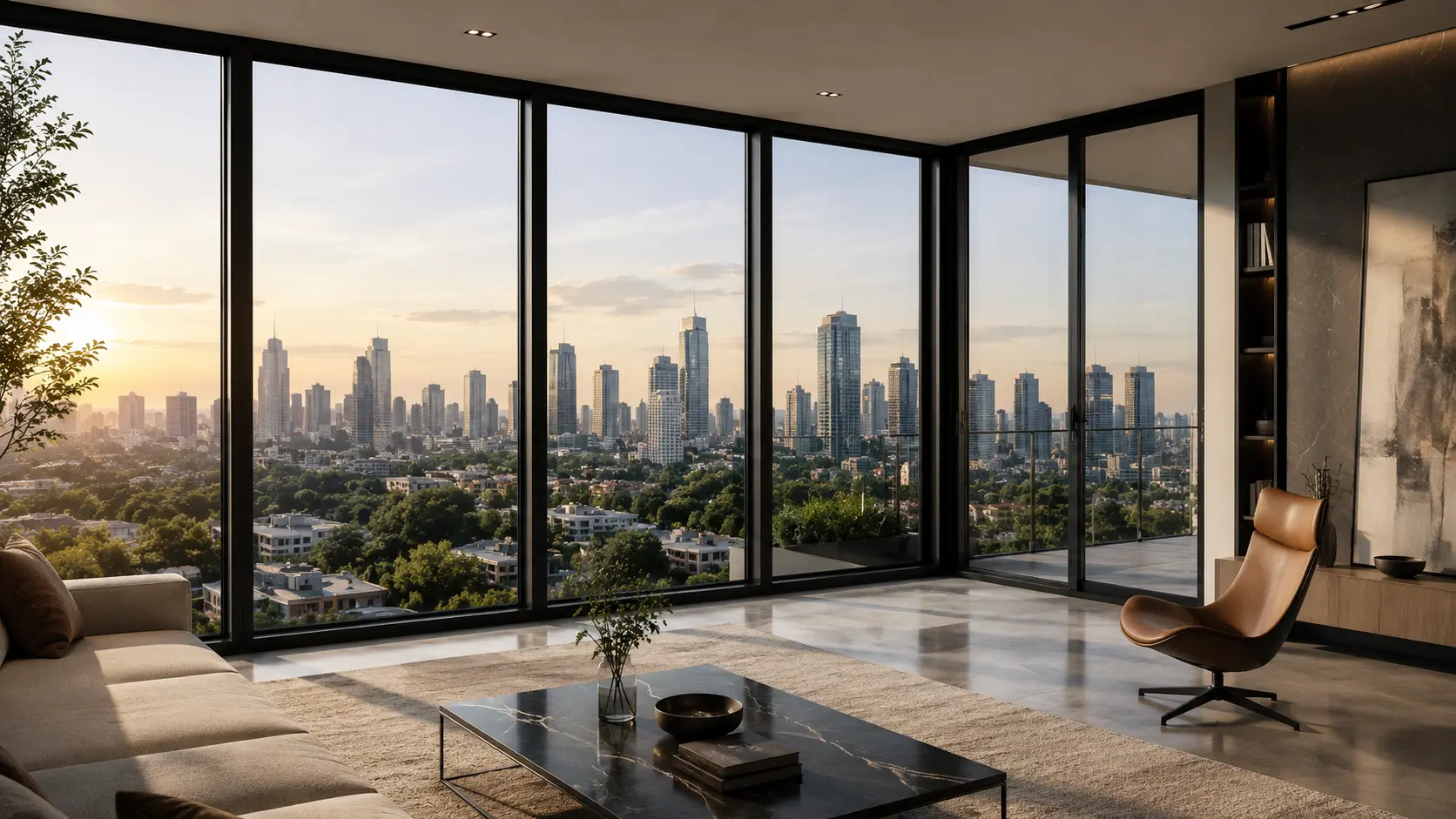
Windows are no longer mere openings in a building. They are critical components of the building envelope, influencing aesthetics, thermal comfort, energy efficiency, acoustic performance, safety, ventilation, maintenance costs, and long-term asset value.
With increasing demand for premium residential developments, commercial towers, hospitality projects, healthcare facilities, and green buildings, aluminium has emerged as the preferred material for modern fenestration systems.
However, selecting the right aluminium window is not as simple as choosing a colour or profile size. Developers, architects, consultants, contractors, and homeowners must understand section design, alloy grades, coating systems, glass compatibility, wind load requirements, and lifecycle performance before making a decision.
This article provides a comprehensive guide to selecting aluminium windows based on cost, quality, utility, and engineering performance.
Why Aluminium Windows Are Dominating Modern Construction
Aluminium has become the material of choice because it offers:
- High strength-to-weight ratio
- Slim and elegant sightlines
- Large opening capabilities
- Corrosion resistance
- Minimal maintenance
- Recyclability and sustainability
- Compatibility with modern glass systems
- Long service life exceeding 30–40 years
Unlike timber, aluminium does not warp, rot, or attract termites. Compared to uPVC, aluminium offers superior structural performance for larger openings and high-rise buildings.
Understanding Aluminium Window Sections
The most critical factor in window selection is the aluminium section. Many buyers compare prices without understanding that two windows may appear identical but have completely different structural capabilities.
Light Duty Sections
Thickness: 0.9 mm – 1.2 mm
Application: Affordable housing, Interior partitions, Small openings
Advantages: Lower cost, Lightweight
Limitations: Reduced rigidity, Limited glass capacity, Shorter lifespan
Recommended only for budget projects.
Standard Residential Sections
Thickness: 1.2 mm – 1.6 mm
Application: Apartments, Villas, Residential projects
Advantages: Balanced cost and performance, Good structural capability
Most premium residential projects should use a minimum of 1.4 mm thickness.
Heavy Duty Sections
Thickness: 1.8 mm – 2.5 mm
Application: Luxury residences, Commercial buildings, Hotels, Institutional projects
Advantages: Higher wind load resistance, Better hardware support, Suitable for large glass panels
Recommended for high-rise buildings and premium developments.
Architectural Systems
Thickness: 2.0 mm – 3.0 mm
Application: Curtain walls, High-performance facades, Premium developments
Advantages: Maximum durability, Large span capability, Superior aesthetics
Typically used in Grade A commercial developments.
Choosing the Right Window Type
Sliding Windows
Most common system in India.
Advantages: Space efficient, Economical, Easy operation, Suitable for apartments
Disadvantages: Lower air tightness, Moderate acoustic performance
Best suited for: Mid-income housing and residential developments.
Casement Windows
Advantages: Better sealing, Excellent ventilation, Superior acoustic performance, Improved thermal efficiency
Disadvantages: Requires opening space
Best suited for: Luxury residential projects and hotels.
Tilt and Turn Windows
Premium European system.
Advantages: Multiple opening modes, Excellent weather performance, High security, Superior acoustic insulation
Best suited for: Premium and luxury developments.
Lift and Slide Systems
Used for large openings.
Advantages: Large panoramic views, Smooth operation, Premium appearance
Best suited for: Luxury villas and sea-facing apartments.
Aluminium Alloy Selection
Not all aluminium is the same.
6063-T5 Alloy
Industry standard. Advantages: Excellent extrusion quality, Good corrosion resistance, Smooth surface finish. Most premium system companies use 6063-T5.
6061 Alloy
Advantages: Higher strength, Better structural performance. Used in special engineering applications.
For most building projects, 6063-T5 remains the preferred choice.
Powder Coating vs Anodizing vs PVDF
Surface finish determines aesthetics and durability.
- Powder Coating (60–80 Microns): Cost effective, wide colour range, easy maintenance – suitable for most residential projects.
- Anodizing: Metallic appearance, superior corrosion resistance, long service life – preferred for coastal regions.
- PVDF Coating (25–35 Microns): Exceptional UV resistance, premium finish, long-term colour stability – preferred for high-rise facades and landmark buildings.
For Mumbai, Chennai, Goa, Kochi and other coastal cities, anodized or PVDF-coated systems are recommended.
Importance of Hardware
A premium profile with poor hardware will fail prematurely. Key hardware components: Hinges, Rollers, Locks, Friction stays, Handles. Premium hardware brands typically deliver better durability, higher load capacity, smooth operation, and improved safety. Hardware contributes significantly to overall window performance.
Glass Selection and Compatibility
The glass often represents 60–80% of the visible window area. Common options:
- Clear Toughened Glass (most economical)
- Laminated Glass (enhanced safety and acoustic performance)
- Double Glazed Units (DGU) (improved thermal and acoustic performance)
- Low-E Glass (energy-efficient reducing heat gain)
- Acoustic Glass (used near highways, airports, rail corridors)
Selecting the right glass is often more important than selecting the profile itself.
Wind Load and Structural Design
Many failures occur because windows are selected based on appearance rather than engineering. Key design considerations: Building height, Wind speed zone, Panel size, Glass weight, Structural deflection limits. High-rise towers in Mumbai often require significantly stronger sections than low-rise residential buildings. Engineering calculations should always verify wind pressure, mullion strength, deflection criteria, and anchorage design.
Thermal Performance
Energy-efficient buildings require thermally optimized windows. Modern systems use thermal breaks, multi-chamber profiles, double glazing, Low-E coatings. Benefits include lower HVAC costs, improved occupant comfort, better sustainability ratings, enhanced building value.
Acoustic Performance
Noise pollution is becoming a major concern in urban environments. Factors affecting acoustic performance: Glass thickness, Air gap, Seal quality, Profile design, Installation quality. Premium systems can achieve noise reductions exceeding 35–45 dB.
Sustainability and Green Buildings
Aluminium is one of the most sustainable building materials. Benefits include: 100% recyclable, long lifecycle, reduced replacement costs, lower environmental impact, supports green building certifications. Green building frameworks increasingly favour high-performance fenestration systems.
Cost Comparison
- Economy Segment: 1.0–1.2 mm, expected life 10–15 years
- Mid-Segment: 1.4–1.6 mm, expected life 20–25 years
- Premium Segment: 1.8–2.0 mm, expected life 30–40 years
- High Performance Architectural Systems: 2.0–3.0 mm, expected life 40+ years
The cheapest window is rarely the most economical over the building lifecycle.
Expert Recommendations
- Affordable Housing: 1.2–1.4 mm sliding systems with powder coating.
- Mid-Premium Residential: 1.4–1.6 mm casement or sliding systems with high-quality hardware.
- Luxury Residences: 1.8–2.0 mm thermal break casement systems with Low-E DGU glazing.
- Commercial Towers: High-performance architectural systems with PVDF coating and engineered facade integration.
Conclusion
Selecting aluminium windows should be viewed as a long-term investment rather than a procurement exercise. The ideal system balances aesthetics, structural performance, energy efficiency, acoustic comfort, durability, and maintenance requirements. Developers and homeowners should evaluate section thickness, alloy quality, coating system, hardware specifications, glass configuration, and engineering performance before making a final decision.
A well-designed aluminium window system can enhance building value, improve occupant comfort, reduce operating costs, and deliver reliable performance for decades.
In modern construction, windows are no longer products; they are engineered building systems that significantly influence the overall success of a project.
SEO Keywords: Aluminium Windows, Aluminium Window Sections, Fenestration Design, Building Facade, Window Engineering, Architectural Aluminium Systems, Sliding Windows, Casement Windows, Thermal Break Windows, DGU Glass, Low-E Glass, Powder Coating, PVDF Coating, Anodized Aluminium, Acoustic Windows, Energy Efficient Buildings, Green Building Fenestration, Facade Engineering, High Rise Window Design, Aluminium Profile Selection, Window Lifecycle Cost.
Coming Next in Fenestration & Facade Series
Part 2: Understanding Aluminium Systems — Domal, Schuco, Reynaers, AluK, Technal and Indian Window Brands Compared. A must-read for developers, architects, and real estate professionals evaluating system suppliers.
Optimise your building envelope with expert guidance.
At GGDC Consultants LLP, we help developers and real estate firms select high-performance fenestration systems that enhance asset value, reduce lifecycle cost, and achieve sustainability goals.
Technical advisory | Fenestration strategy | Facade engineering